
Scroll, Worry, Repeat: Health Misinformation, Hormones and the Anxiety It Leaves Behind
We spend a lot of time, rightly, worrying about what social media does to children and teenagers. We debate age limits, write codes of practice and ask platforms to keep content that is unchecked, ill-informed and harmful away from young people. That work matters.
But here is a question we keep coming back to. Who is worrying about the 46-year-old woman lying awake at 3am, scrolling through perimenopause videos? Or the 13-year-old learning about her cycle from a reel that tells her what to eat in her "luteal phase"? Or anyone, of any age, trying to make sense of a symptom with nothing but an algorithm for company?
Health misinformation doesn't stop being dangerous when you turn 18. And when it comes to hormones, periods, perimenopause and menopause, the volume of it is staggering.
How big is the problem?
It is bigger than most of us realise.
A systematic review in the Journal of Medical Internet Research pulled together 69 studies of health misinformation on social media. In some studies, the share of posts containing misinformation reached as high as 87%. Even on the topic with the lowest levels, medical treatments, it was still around 30%.
Women's hormone health is especially exposed. A 2026 analysis of menopause content on TikTok, using the hashtags #menopause and #menopausehealth, found that the space was dominated by non-physicians. Almost a quarter of videos were openly selling something. Very few cited any source at all, "natural" remedies were heavily promoted, evidence-based treatments got little airtime, and AI-generated videos were starting to appear.
It isn't only TikTok, and it isn't only one direction. A 2025 study in BMJ Open examined the most visible online claims about HRT across Facebook, Google, Instagram, TikTok, YouTube and X in the UK. Two in every three claims fell outside the official prescribing guidance, and fewer than a quarter of sources were free of a commercial conflict. Misinformation can oversell a treatment just as easily as it can frighten women away from one.
The picture for younger women is similar. A 2025 study of "cycle syncing" videos (the trend of matching diet and exercise to each phase of your cycle) found that only about one in three creators gave any credentials, and that the content took a complicated, inconclusive body of research and presented it as simple fact. A study of 1,000 TikTok videos about the contraceptive pill found the information was generally low quality, and that entertaining, non-educational videos got significantly more views, likes and comments than the educational ones.
Why the wrong information travels further
This is not because people are foolish. It is because of how these platforms, and our brains, work.
The largest study ever done on the spread of true and false information online, published in Science, tracked around 126,000 stories shared on Twitter over more than a decade. False stories spread further, faster and more widely than true ones in every category studied, reaching 1,500 people roughly six times faster. The researchers found that people, not bots, drove the difference. False claims tended to feel new and surprising, and novelty is what we share.
In December 2025, The BMJ published an analysis on medical advice from social media influencers. The authors identified four sources of bias: lack of medical expertise, industry influence, the creator's own business interests, and personal beliefs. They pointed out that platforms are built to reward attention rather than accuracy, and that emotionally charged content spreads more widely than careful, evidence-based information. They also noted that having credentials doesn't guarantee good advice.
Money matters here too. A systematic review in BMJ Open found that between 15% and 80% of healthcare professionals active on social media had financial relationships with industry, yet disclosure of conflicts of interest was mostly low, ranging from 0% to 60%.
And hormone health is fertile ground. Symptoms are wide-ranging and easy to confuse with other things. Research into women's health has been underfunded for decades, with only around 1% of global health research funding going to menopause. When women can't find clear answers, or don't get them in a ten-minute appointment, the gap gets filled. Often by someone with something to sell.
From information to anxiety
This is the part we don't talk about enough.
There is a name for the cycle of searching for health information online and coming away more worried than when you started: cyberchondria. A meta-analysis of 20 studies, involving more than 7,300 people, found a clear link between health anxiety and searching for health information online, and a much stronger link between health anxiety and cyberchondria.
A second meta-analysis, published in 2021, went further. Its authors described anxious health searching as a kind of "safety behaviour" kept going by intermittent reinforcement. In plain terms, every so often a search reassures you, and that occasional relief is exactly what keeps you searching. Most of the time, it leaves you more unsettled.
The way health content is framed also matters, not just whether it's accurate. In a randomised experiment published this year, 737 UK women aged 40 to 83, all perimenopausal or post-menopausal, were shown social media posts about menopause framed in one of three ways: as a normal life stage, as distressing, or as transformative. Women who saw the distress-framed posts reported more worry, confusion and anxiety, and felt less reassured, less optimistic and less empowered. Women who were older or post-menopausal were less affected.
Think about what that means for a woman in perimenopause. Many of the symptoms of this transition, such as poor sleep, palpitations, low mood and racing thoughts, overlap with anxiety itself. Add a feed full of frightening, contradictory, unsourced content, and you have a loop that is very hard to step out of.
We see the results at our events. Women arrive at GP appointments fearful, under-informed and sometimes misinformed, unsure what to ask or what to believe.
Should people have to show their sources?
Our short answer: yes, in spirit. If you are making a claim about someone's health, you should be able to say where it came from.
Some countries have already started to act. According to The BMJ analysis, Australia bans paid testimonials for health products, India requires influencers to disclose their medical credentials, South Africa requires clear sponsorship labels and evidence-based claims, and China restricts certain health content to verified professionals. In Ireland, advertising rules already expect influencers to make it clear when content is an ad.
But we should be honest about the limits.
A citation is not the same as evidence. It is easy to link to a study that doesn't say what you claim, or to a small study in mice presented as proof for women.
Credentials alone aren't enough. As The BMJ authors note, qualified people can mislead too, especially when they have a product to promote.
Lived experience has real value. Women have always learned from other women, and online communities have helped many people feel less alone. Rules that silence every voice without a medical degree risk losing something important. China's approach, the strictest of all, has been criticised on exactly these grounds.
So rather than one rule, we'd like to see three simple expectations, for creators, brands and clinicians alike:
Show your source. What is this claim based on?
Show your stake. Are you being paid, gifted or selling something related?
Show your standing. Are you speaking as a clinician, as a researcher, or from personal experience? All three are valid, but they are not the same thing.
Platforms have a role too. Researchers studying contraceptive and menopause content have called for stronger review processes, for evidence-based videos to be given a boost in feeds, and for more clinicians to be visible online.
How do we tackle this without making people more anxious?
This is the real challenge. "The internet is full of lies" is not a helpful message for someone who is already frightened. Fear-based messaging about misinformation can easily become one more thing to worry about.
The good news is that there is evidence for an approach that builds confidence rather than fear. It's called prebunking, or psychological inoculation. Instead of chasing every false claim after it spreads, you teach people to recognise the common tricks used to mislead them, before they come across them. A 2025 meta-analysis of 33 experiments, involving more than 37,000 people, found that prebunking helped people tell reliable from unreliable information, without making them more cynical or distrustful overall. An earlier meta-analysis found it reduced how believable health misinformation seemed and how likely people were to share it. Researchers are still debating how large these effects are, but the direction is encouraging.
In that spirit, here is a calm, five-question pause test you can use next time something in your feed makes your heart beat a little faster:
Who is talking? A clinician, a researcher, someone sharing their own story, or a brand?
What do they gain? Look for a product, a discount code, a course or a paid partnership.
Where is the evidence? Is a source named? Does it come from a recognised body?
How does it make me feel? Urgency, fear or a "miracle fix" are signals to pause, not to act.
Does it apply to me? Bodies, cycles and transitions vary hugely. One person's experience is not a diagnosis.
One of our favourite tips comes from the gynaecologist Dr Jen Gunter, who has written about menopause misinformation for Obstetrics & Gynecology. She suggests checking what the major professional bodies say, such as the British Menopause Society and The Menopause Society in North America. If several independent expert groups agree, that's a good place to start. In Ireland, the HSE's menopause information is another trusted starting point.
And perhaps most importantly: bring it to your GP. Write down what you've read and the questions it raised. A good consultation is a conversation, and what you've seen online can be a useful starting point rather than something to hide.
We also want to be clear about what we are not saying. We are not telling women to stop looking for information online. A 2025 survey of 627 women found that online menopause resources are widely used and widely seen as useful and trustworthy. Women go online because they are looking for answers they haven't found elsewhere. The solution is better information, better skills and better care. Not shame, and not silence.
Where we stand
At The Balance Project, this is why we do what we do.
Every Balance Edit article is referenced, so you can check our sources for yourself. Our workshops and retreats are clinician-led. Through Own It!, we work with parents and teenagers not only on what's normal for periods and hormones, but on how to question what they see online. And through our partnership with RCSI on Project CHIME, we're helping to shape how future doctors are trained in menopause care, so that women who seek help find clinicians ready to give it.
We hold ourselves to the same standard we're asking of others. If we ever get something wrong, tell us.
Protecting children online is the right thing to do. But the same care, the same insistence on facts, transparency and kindness, should extend to all of us. At every age and every stage.
Always with balance. Always with you.
*If worries about your health are taking up more of your time and headspace than you'd like, please talk to your GP. Health anxiety is common, it's real, and it is very treatable.
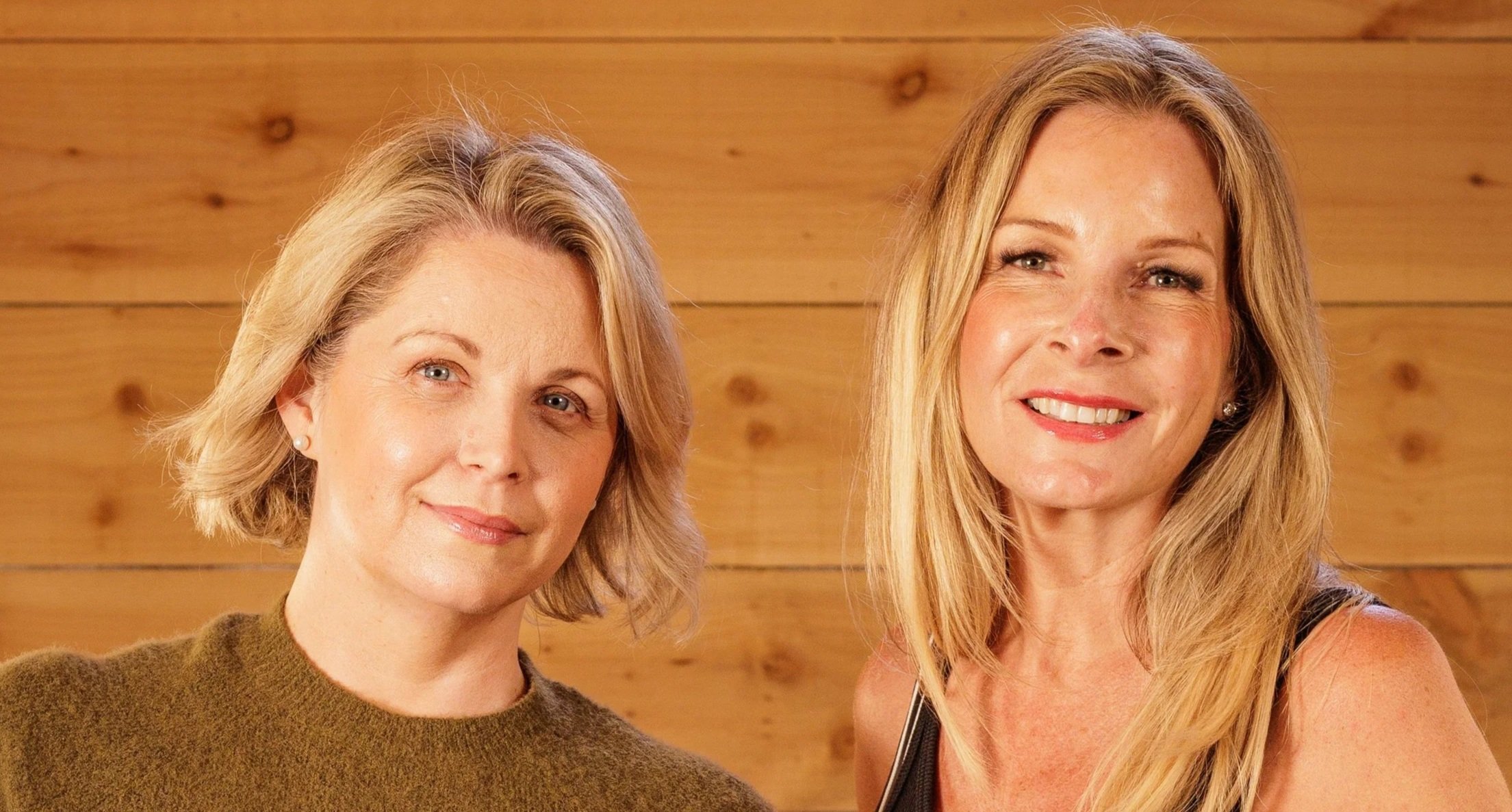
Blog by Georgie Sliney McCormack & Helen Flynn
Georgie and Helen are the co-founders of The Balance Project. Through their work, they are committed to making women's health information more accessible, informed, and empowering. They believe better conversations lead to better understanding, better support, and better outcomes for women.
