
Why Indeed? Menopause, Education and the Gap Women Fall Through
As World Menopause Month begins, Dr Louise Newson, the UK GP and menopause specialist, posed a question that has stayed with us all week. Around 1.34 billion women worldwide are menopausal, she wrote, yet only around 5% are prescribed hormone treatments, treatments that both improve symptoms and protect future health.
Her question was a simple one: why are so many women needlessly suffering?
We've been asking the same thing. At our workshops, retreats and community days, we hear the same story again and again. A woman who has spent months, sometimes years, feeling not quite herself. Who put it down to stress, to busy family life, to "just getting older". Who eventually made it to her GP, and didn't always leave with the answers she needed.
So let's ask it properly. Why indeed?
Menopause is not something to simply "get through"
Newson makes a powerful point. Menopause affects every woman. It lasts for the rest of her life. And the drop in hormones causes real changes in how her cells, tissues and organs work. Yet we still talk about it as something to grit your teeth through.
The symptoms are anything but trivial: low mood, anxiety, memory problems, poor sleep, exhaustion, headaches, aching joints, palpitations, vaginal dryness, urinary symptoms, hot flushes and night sweats.
She goes further, arguing that menopause actually meets the definition of a disease: a condition that impairs normal functioning and has distinctive signs and symptoms. The World Health Organization instead classes it as a health and wellbeing issue, a natural part of biological ageing. But as she points out, osteoporosis and dementia are also conditions of ageing, and nobody suggests women should simply put up with those.
Not everyone in medicine is comfortable with the word "disease", and that is a debate worth having. But Newson is clear that the label isn't about calling women unwell. It's about taking their symptoms, and their long-term health, seriously. Whatever word we use, the outcome women deserve is the same: to be recognised, properly informed, and offered evidence-based treatment. For many women that will include HRT; for others, different options will be right.
Women are experts at putting themselves last
Part of the answer to "why" starts with us.
The research on this is striking. A 2024 Hologic–Gallup study found that more than six in ten women in the US find it hard to make their own health a priority, with caring for family members first among the most common barriers. Women with children under 18 at home were twice as likely to name putting others first as the thing holding them back.
A separate 2024 survey of over 10,000 women (the Women's Wellness Index from PYMNTS Intelligence and CareCredit) found that 62% of women consider their household's healthcare more important than their own, rising to 78% among mothers in two-parent families.
This is US data, but we suspect every woman in Ireland reading this will recognise herself in it. Midlife often lands at exactly the moment we are most stretched: teenagers at home, ageing parents, careers at their busiest. Closer to home, a Menopause Hub survey of almost 2,900 women in Ireland found that more than two-thirds felt they had not been adequately prepared for the impact of perimenopause and menopause.
So when a woman finally does carve out the time to book that appointment, it matters enormously what happens next.
When she asks for help, the answer has to be right
In Newson's words:
"Not prescribing hormone treatments is harming many women and this urgently needs to change. There needs to be better education for all healthcare professionals about hormones to improve the future health of women."
She hears every day from women who are dismissed, or prescribed medication that doesn't address the cause. Antidepressants are a common example. Menopause guidelines are clear that they should not be the first-line treatment for the low mood linked to perimenopause and menopause. Yet in a Newson Health survey, 39% of women said they were offered antidepressants rather than HRT as their first treatment.
Think about what that means for the woman we described above. She has finally put herself first, sat in the waiting room, found the words. If she leaves without being asked whether this could be hormonal, she may not come back for a very long time.
In Ireland, the GP is the front door
This is where the Irish picture becomes so important. According to the Irish College of General Practitioners, over 90% of menopause management in Ireland is delivered in general practice, with only a small number of women needing specialist care.
That makes your GP the single most important clinician in your menopause journey.
There has been real progress. Ireland now has six specialist menopause clinics, and since June 2025 HRT for menopause symptoms has been free. Cost is no longer the barrier to the medication itself. Which means the barrier now is knowledge, on both sides of the consulting room.
A 2026 scoping review from University College Cork found that menopause education for healthcare professionals remains limited and inconsistently embedded across training programmes. Crucially, the same review found that where education was provided, it consistently improved clinicians' knowledge, confidence and ability to manage symptoms, including prescribing HRT.
Education works. It just isn't reaching everyone yet.
This isn't about blaming GPs. Many are doing outstanding work, and initiatives like the ICGP's free online menopause course and the Irish "HRT prescribers" peer-support network, which has hundreds of GP members, show how much appetite there is to get this right. The goal is to make that excellent care the norm, not the exception.
We wouldn't ask a patient to diagnose anything else
Here is the gap that worries us most.
Many women simply don't recognise their symptoms as perimenopause. A 2026 international survey of more than 17,000 women across 158 countries found that hot flushes were the symptom most people associated with perimenopause, but the symptoms women most commonly experienced were fatigue, exhaustion and irritability. The researchers warned that this mismatch can delay women seeking care.
So picture a woman of 44 who sees her GP about anxiety. Another time, poor sleep. Then aching joints, or palpitations, or brain fog that's frightening her at work. She describes each one separately. She may never mention her periods, because it doesn't occur to her that they're connected.
We would never expect a patient to diagnose her own thyroid condition, her own diabetes or her own heart problem. We expect her doctor to listen, join the dots and ask the right questions. Menopause should be no different. "Could this be perimenopause?" should be a routine question for any woman from her late thirties onwards presenting with these symptoms, whether or not she raises it herself.
Education is the key, on both sides of the desk
Change has to happen, and education is how it happens.
For women, that means knowing that perimenopause can start years before your periods stop, knowing the full range of symptoms (not just hot flushes), and walking into your GP's surgery ready to ask:
Could my symptoms be related to perimenopause or menopause?
Is HRT an option for me? If not, why not, and what are the alternatives?
If I've been offered antidepressants for low mood, could my hormones be playing a part?
What should I be doing now to protect my bone and heart health?
Keeping a simple symptom diary for a few weeks beforehand can make that conversation far easier.
For clinicians, it means menopause becoming a core part of training at every level, not an optional extra.
That's exactly why The Balance Project is proud to partner with the RCSI on Project CHIME (Creating Holistic & Inclusive Menopause Education). Together we're gathering real women's experiences of perimenopause, menopause and post-menopause to help shape a new education module for doctors. If you'd like your story to help shape how future doctors are trained, the anonymous questionnaire is open now at thebalanceproject.ie/rcsi-collaboration.
So, why indeed?
Newson ends by wondering what would change if more people thought differently about menopause.
We think we know. Women would stop apologising for taking up a GP's time. Clinicians would ask the question before a woman had to. And far fewer women would spend years believing that feeling this way is simply how life is now.
This World Menopause Month, let's stop asking women to get through it, and start making sure that when they ask for help, the people they turn to are equipped to give it.
Always with balance. Always with you.
*This article is for general information and is not a substitute for personalised medical advice. HRT isn't suitable for everyone, so please speak to your GP about what's right for you.
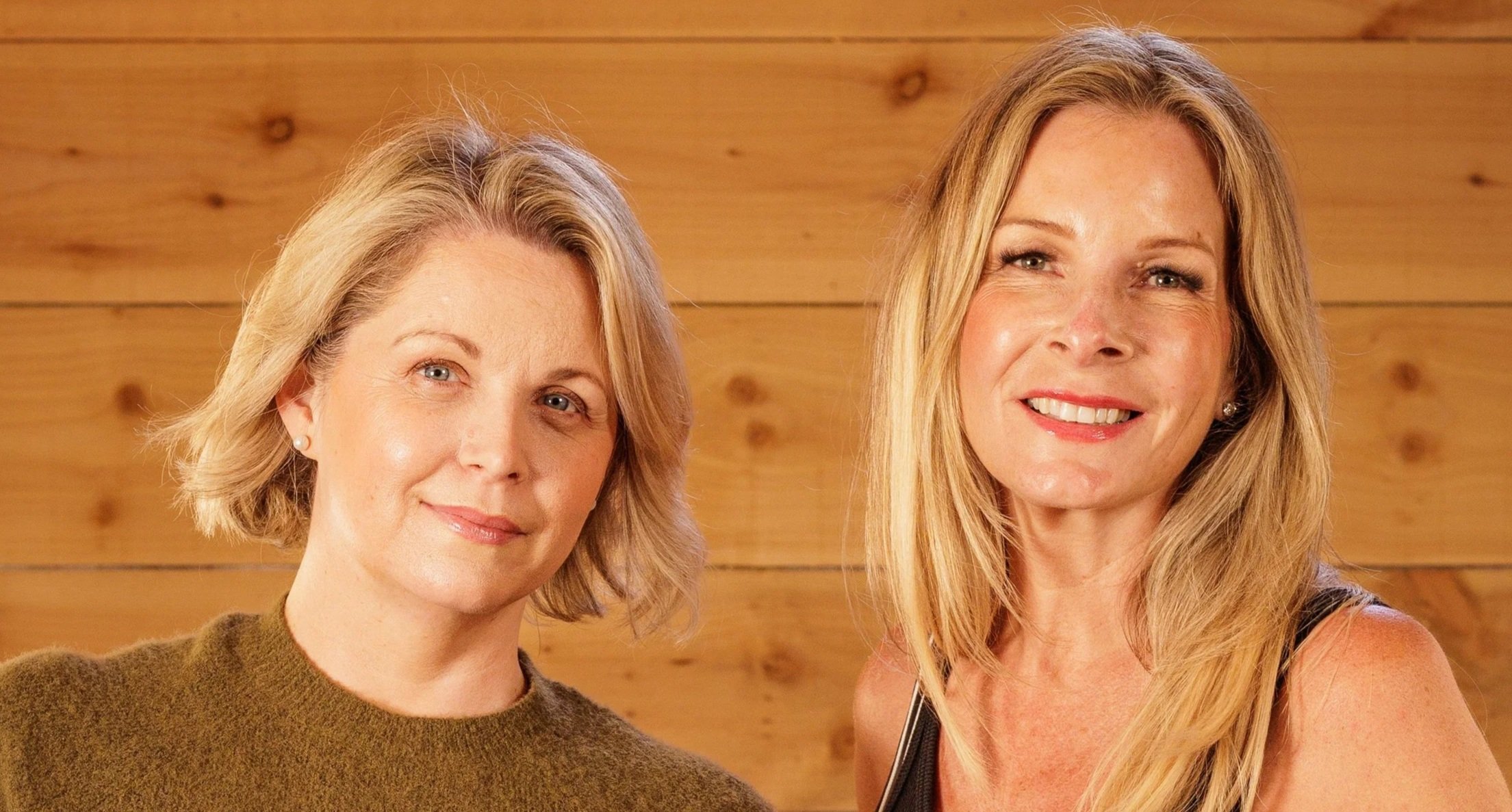
Blog by Georgie Sliney McCormack & Helen Flynn
Georgie and Helen are the co-founders of The Balance Project. Through their work, they are committed to making women's health information more accessible, informed, and empowering. They believe better conversations lead to better understanding, better support, and better outcomes for women.
