
September 10th is World Suicide Prevention Day. This year's global theme, set by the International Association for Suicide Prevention, is "Changing the Narrative on Suicide" — a call to move from silence and stigma toward open, honest, evidence-based conversation.
This article discusses suicide and mental health in a general, informational way. If you are struggling right now, please skip to the support section at the end of this article — you don't need to read anything else first.
That word, "narrative," matters. Because one of the most persistent and unhelpful narratives around suicide is the search for a single explanation — it was the exams, it was the breakup, it was "just hormones," it was "just a phase." We are not naive enough to believe that. The evidence isn't either. It's always more than one thing. And understanding that complexity is, itself, one of the most protective pieces of knowledge we can pass on to each other.
It is never just one thing
The most cited scientific review of suicide risk, published in The Lancet by Gustavo Turecki and David Brent, makes this point unambiguously: "Suicide has many causes, with substantial variability in the strengths and patterns of association of risk factors across sex, age, culture, geographic location, and personal history." The authors describe risk as building across layers — genetic and biological vulnerability laid down early in life, psychological patterns that develop over years, and immediate stressors that act as a final trigger, not a sole cause. No single factor, age group, or life stage owns this. It shows up differently across a teenager's world and a midlife woman's world, and understanding both matters — which is exactly where The Balance Project's own work sits, from Own It! workshops with parents and teens through to supporting women in perimenopause, menopause and beyond.
For teens and the parents raising them
Adolescence is a period of real vulnerability, but the research offers something genuinely useful here: connectedness is protective, and it's specific.
A 2024 study in the Journal of Child Psychology and Psychiatry, following nearly 2,900 adolescents over six months, found that overall social connectedness — and school connectedness in particular — was associated with a reduced likelihood of a suicide attempt. Feeling genuinely connected to teachers and peers at school stood out as the strongest single protective factor in the data.
A 2025 longitudinal study in The Lancet Psychiatry, tracking over 3,000 Australian children from age six through to fifteen, found that the protective factors that matter shift as children grow: a sense of belonging and positive wellbeing in early adolescence, strong parent relationships and community involvement in the preteen years, and school safety and satisfaction reaching all the way back to the early primary years. The researchers' conclusion was that protective factors "change as children grow and develop" — meaning the conversations we have with our kids, and the sense of belonging we build for them, need to start early and keep evolving, not arrive all at once at age fourteen.
This is precisely the thinking behind Own It!: bringing parents and teens into the same room, breaking out separately and together, because both the family relationship and the wider sense of belonging matter, and neither one alone is the whole answer.
The transition we don't talk about enough
Here's a piece of the picture that gets far less airtime: the perimenopause and menopause transition.
A 2024 study published in BJPsych Open, examining 1,212 women attending a UK menopause clinic, found that 98% reported mood or mental health symptoms, and — more strikingly — around one in six women (16%) reported having had thoughts of self-harm or suicidal ideation on at least some days in the two weeks before their appointment. A 2025 systematic review in the journal Women's Health, which pooled 19 studies on menopause and suicide, found that the majority — 16 of the 19 — identified an association between the menopausal transition and increased suicidality, with perimenopause specifically flagged as the period of greatest vulnerability in several of those studies. Proposed explanations include the effect of dropping oestrogen and progesterone on serotonin regulation and mood stability, alongside physical health strain, sleep disruption, and — critically — the compounding effect of feeling dismissed or unheard when these symptoms are raised.
It's worth being honest about the limits of this evidence, too. A separate 2024 systematic review in PLOS Mental Health, looking at 28 studies, described the overall research picture as genuinely mixed — some studies point to perimenopause as highest-risk, others find no clear link to hormonal status at all, and the authors were candid that methodology varies enormously across this field and that women's own lived experience has rarely been built into the research design. What's consistent, though, is this: standard depression screening tools regularly miss what's actually going on for women in this transition, because low mood in perimenopause doesn't always look like textbook depression. That gap between what's felt and what's screened for is exactly why this deserves to be named clearly, rather than folded quietly into "just" hormones, or dismissed as something to simply push through.
What actually helps
Two findings from the evidence are worth carrying into any conversation about suicide prevention, because they cut against common instincts.
Asking the direct question doesn't cause harm — it helps. A widely cited 2014 review in Psychological Medicine examined the available evidence and found no support for the fear that asking someone directly about suicide plants the idea or increases risk. If anything, the authors found that talking about it openly tended to reduce distress rather than increase it. This matters enormously, because the fear of "making it worse" is often exactly what keeps people from asking the question that could open the door to support.
Training people to notice and respond works. A 2025 meta-analysis of 16 randomised controlled trials, published in BMC Public Health, found that gatekeeper training — teaching everyday people (teachers, healthcare workers, parents, coaches) to recognise warning signs and respond confidently — produced meaningful, measurable improvements in knowledge, confidence and preparedness to help. The effect fades over time without refreshers, which is really just an argument for making these conversations a regular habit rather than a once-off training.
Underneath both findings sits the same theme running through the teen research and the menopause research alike: connection, community and honest conversation are not soft, secondary add-ons to suicide prevention. They are the evidence-backed core of it.
Changing the narrative, together
This World Suicide Prevention Day, the invitation isn't complicated: check in on someone properly, ask the direct question if you're worried, and hold space for the idea that whatever someone is carrying is very likely more than one thing — a hormonal transition and a bereavement, a school pressure and a family strain, a diagnosis and a silence around it. None of us need to have all the answers. We just need to be willing to stay in the conversation, and to know where to point someone when they need more than we can give.
That's the thread running through everything we do at The Balance Project, whether it's a room full of parents and teens learning to talk to each other, or a community of women finally naming what perimenopause is actually doing to them. Education so people recognise what they're feeling. Awareness so nobody assumes it's "just them." Community so no one carries it alone.
If you need support
If you or someone you know is in immediate danger, call 112 or 999, or go to your nearest emergency department.
Samaritans — 116 123 (free, 24/7, for anyone in emotional distress) · jo@samaritans.ie
Text About It — Text HELLO to 50808 (free, 24/7 text support)
Pieta — 1800 247 247 (free, 24/7 crisis helpline) or text HELP to 51444
Aware (depression and mental health support) — 1800 80 48 48 (10am–10pm daily)
Jigsaw (free mental health support for ages 12–25) — jigsaw.ie
Childline (under 18) — 1800 66 66 66 (24/7) or text TALK to 50101
Teenline — 1800 833 634 (24/7)
This article is intended for general information and awareness. It is not a substitute for professional medical or mental health advice, diagnosis, or treatment.
Always with balance. Always with you.
If you'd like a space to pause, connect, and be reminded you're not doing this alone, The Balance Project runs community days and workshops throughout the year — find out more at thebalanceproject.ie/events.
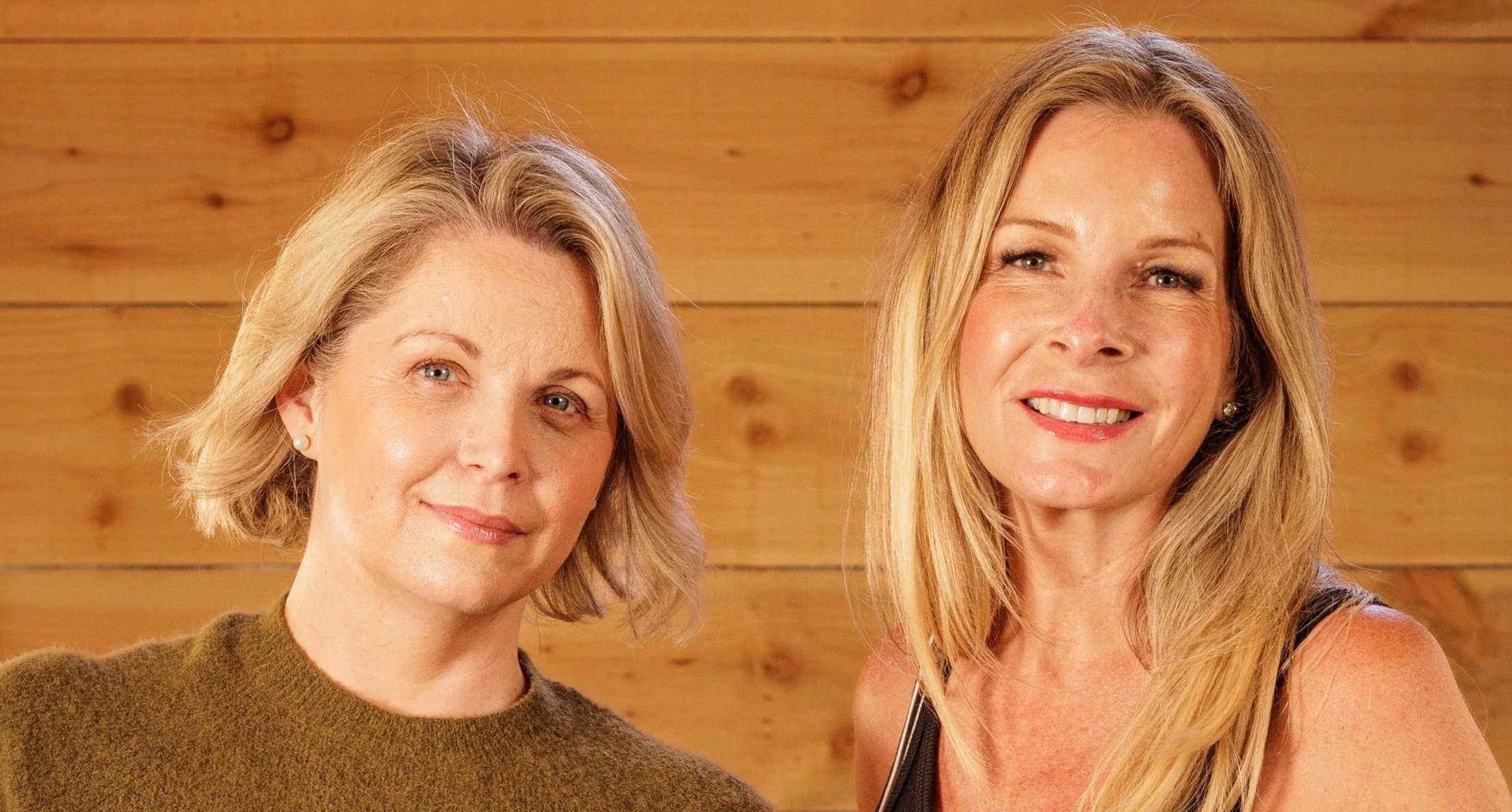
Blog by Georgie Sliney McCormack & Helen Flynn
Georgie and Helen are the co-founders of The Balance Project. Through their work, they are committed to making women's health information more accessible, informed, and empowering. They believe better conversations lead to better understanding, better support, and better outcomes for women.
