
Perimenopause Awareness Month: Why September Matters, Wherever You're Reading This From
You may have seen September being called Perimenopause Awareness Month. Before writing about why it matters, it's worth answering the honest question first: is this actually a global observance, or is it another wellness-calendar addition that's bigger in some places than others? The honest answer is a bit of both — and understanding why is actually the perfect way into the bigger story.
Where "Perimenopause Awareness Month" actually comes from
September's status as Perimenopause Awareness Month began as a US campaign. It was launched through a partnership between the National Menopause Foundation and Perry, a perimenopause community platform, who said they'd identified "a critical gap in public understanding and support for women in the perimenopausal stage." In 2025, twelve US states — including Colorado, Illinois, Oregon and Vermont — issued formal gubernatorial proclamations recognising the month, with organisers stating an ambition to secure recognition across all fifty states.
Separately, Clue — the period and cycle-tracking app used by millions of women globally — also declared September Perimenopause Awareness Month in partnership with the What The Menopause community, positioning it deliberately alongside October's more established Menopause Awareness Month, so perimenopause itself would get dedicated attention rather than being folded into the broader menopause conversation.
So no — unlike World Menopause Day, held every 18th October and formally recognised by the International Menopause Society, September's awareness month isn't (yet) an official, globally coordinated observance. It's a genuinely grassroots effort, still expanding from its US base, with international organisations independently picking it up because the gap it's naming is one they recognise too.
Why the "not official" answer doesn't really matter
Here's the thing: whether or not a government has proclaimed it, the problem Perimenopause Awareness Month exists to address is unmistakably global.
A study published in Menopause, the journal of The Menopause Society, surveyed over 17,000 women aged 18 and older across 158 countries via the Flo health app. Its authors found a consistent "discordance between knowledge of perimenopause and actual symptoms" — meaning what women think they know about perimenopause rarely matches what they go on to experience, a pattern that held internationally rather than in any single country. Clue's own research, drawn from a survey of 26,500 users, tells a similarly stark story: 90% of respondents didn't feel well informed about perimenopause, 70% weren't sure what it actually was, and 84% of women aged 35–45 said they'd never received any information about it from a healthcare provider at all.
This is a knowledge gap with no borders. Which is exactly why the research on how to close it matters so much — and why education, awareness and community keep showing up as the throughline in the evidence.
What the research says about education
In March 2024, The Lancet published a major series on menopause, led by Professor Martha Hickey (University of Melbourne) with contributions from researchers including Dr Jenifer Sassarini (University of Glasgow). Its central argument was that women have been let down by an information environment that swings between two extremes — "put up and shut up" silence on one side, and sensationalised alarm on the other — with very little accurate, balanced information in between. The authors called for "an individualised approach where women are empowered with accurate, consistent and impartial information to make informed decisions which are right for them," and argued healthcare workers can help simply by validating women's experiences and offering consistent, non-commercially-driven information.
That's not just a nice idea — it's measurable. A 2024 rapid review published in Archives of Women's Mental Health pooled findings from 39 separate studies on menopause education programmes. Every single study that measured knowledge found statistically significant improvements after education. Thirteen of sixteen studies measuring symptom severity found meaningful reductions. And every study that measured quality of life — including mental health — found statistically significant improvement too. A separate controlled clinical study of 187 women, published in Frontiers in Public Health, found that a structured multidisciplinary education programme significantly improved menopausal symptoms and led to real, lasting gains in exercise and diet.
Simply put: teaching women what's actually happening to their bodies isn't a "nice to have." It changes outcomes.
What the research says about community
Education on its own, though, isn't quite the whole story — and this is where it gets interesting.
A 2025 UK study exploring a proposed national community-based menopause education and support programme, called InTune, found that 77.4% of respondents felt poorly informed about menopause, and over 91% supported building a national programme to fix that. But the detail that stood out was how women wanted that information delivered: the clear preference — from 68.4% of respondents — was for facilitators with lived experience of menopause and training, over doctors or nurses delivering the same facts in a clinical setting. Peer-delivered, community-based education, in other words, not just information handed down.
That said, the research doesn't suggest community support is some blanket cure. A 2021 study in PLOS ONE examining social support and menopause symptoms found that emotional support alone didn't reliably reduce symptom severity — what mattered more was how a woman processed stressful life events, and how equipped she felt to cope with them. Read alongside the education research, the takeaway isn't "just find your people" — it's that community becomes powerful when it's paired with real information: a space where women aren't just commiserating, but actually learning, together, what's normal, what's treatable, and what to ask for.
Harvard's T.H. Chan School of Public Health, whose Mahalingaiah Lab researches the intersection of reproductive health and environmental exposures, makes a related point: despite how common perimenopause is, "more research is needed to better understand how it affects people throughout their lives." The knowledge gap isn't only in the public — it exists in the research base too, which is exactly why awareness months, however imperfect or wherever they started, still serve a real purpose in pushing funding, research and public conversation forward.
Why this is exactly what we believe in
None of this will surprise anyone who's been to one of our community days or workshops. It's why The Balance Blueprint has "Learn" and "Community" as two of its six pillars, not as separate ideas but as ones that work together — because the evidence backs up what we see in the room every time: women who leave with accurate information and a sense of connection to others going through the same thing are the ones who feel most equipped to navigate what's ahead.
So wherever you're reading this from, whether or not your government has proclaimed September anything at all — the invitation stands. Learn what's actually happening in your body. Talk about it, out loud, with people who understand. That combination, the research is increasingly clear, is what actually helps.
If you'd like to build both into your own life, The Balance Project runs clinician-led workshops and community days across hormone health and perimenopause — find out more at thebalanceproject.ie/events.
Always with balance. Always with you.
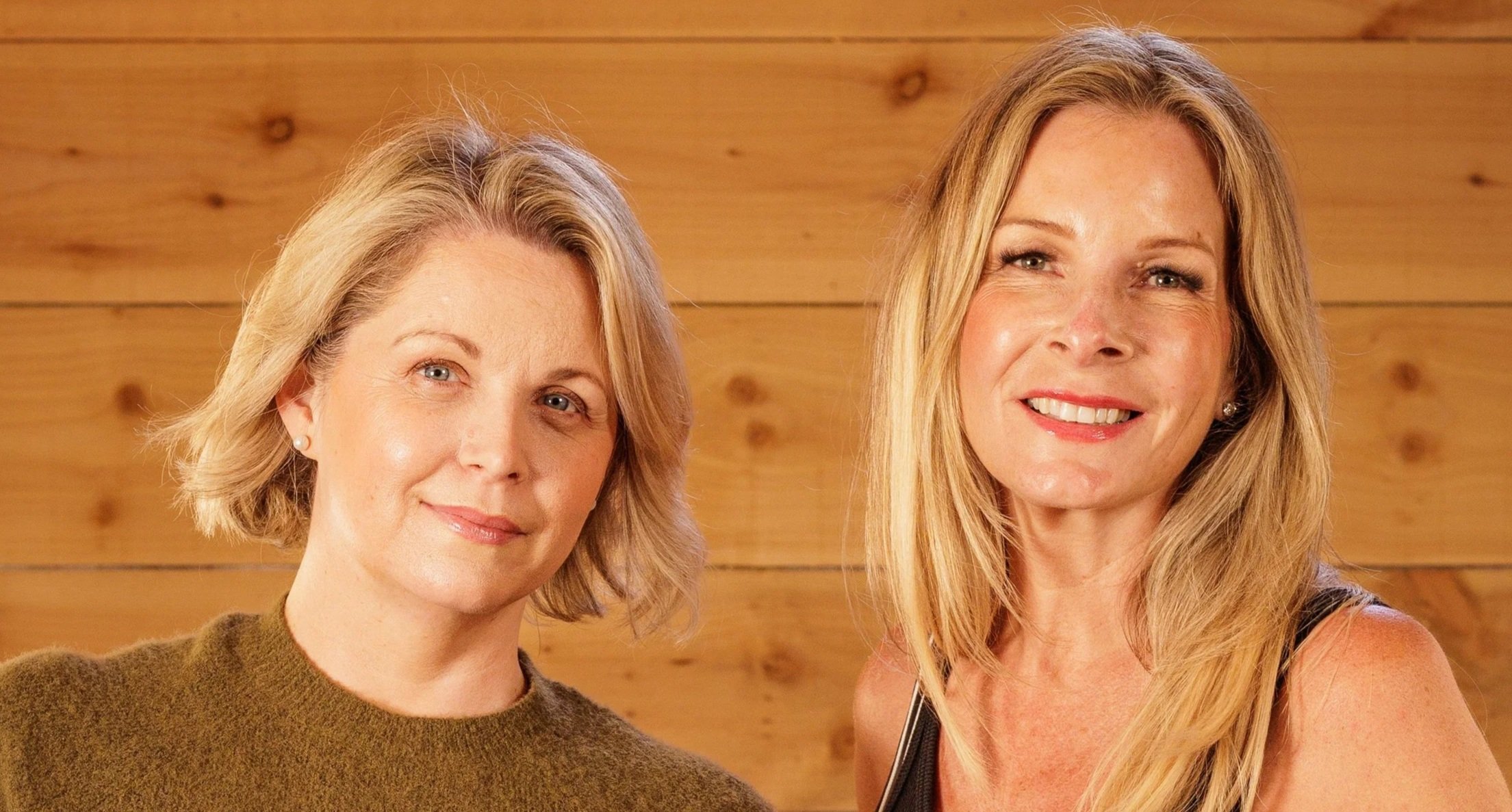
Blog by Georgie Sliney McCormack & Helen Flynn
Georgie and Helen are the co-founders of The Balance Project. Through their work, they are committed to making women's health information more accessible, informed, and empowering. They believe better conversations lead to better understanding, better support, and better outcomes for women.
