
Muscle, Not Miles
The women around us talk about this constantly. We keep each other going, whatever the thing happens to be.
Pilates, yoga, a walk, the gym. It matters less which one than whether somebody is nudging the rest of us to show up. And the same question keeps coming up. We're in our forties and fifties, something has shifted, and we want to know what we should actually be doing.
For a long time we repeated the answer we have all absorbed from everywhere else. Keep moving. Walk more. Be kind to yourself. Lovely advice, and almost none of it an answer to what we were asking. So we started listening properly to our own clinicians and coaches, and a few things we believed turned out to be wrong.
Lots of us love the gym. The music, the camaraderie, the sweat. However, we know that isn't for everyone and it doesn't have to be. But “workouts aren't my thing” can't be the end of it, because the evidence supports the fact that none of this was ever really about gyms. It's about using some kind of resistance to work your muscles and bones, and there are a dozen ways to do that.
What the evidence says is actually going on
Bone loss speeds up sharply around your last period. Roughly two per cent a year, about ten per cent across a decade. The Irish Osteoporosis Society puts it at one in two women over fifty who will break a bone because of osteoporosis, and around seventy-five people a week land in an Irish hospital with a hip fracture, two thirds of them women.
Muscle is a different story. It isn't the size that matters so much as the strength, and strength goes two to five times faster than size does. Nobody loses their independence over a number on a scan. They lose it because they can't get up off the floor.
Why we don't bounce back the way we used to
This is the bit that makes women nod at us. The late night that used to cost you nothing now costs you two days. Jet lag lingers. Two glasses of wine on a Tuesday and you're not right until Friday. And anyone who has done a proper leg session knows the other version of it, where two days later you are eyeing the stairs and wishing you had bought a bungalow.
You're not being dramatic and it isn't only getting older. Oestrogen has a real job in how muscle repairs itself. It helps run the cells that rebuild muscle fibres after you've stressed them, and it limits the damage in the first place. Sleep, when most of the repairing happens, also measurably worsens across the transition.
One study got at this directly. Postmenopausal women on hormone therapy had measurably less muscle damage after the same hard session than women who were not (Dieli Conwright and colleagues, Journal of Applied Physiology, 2009). Same exercise, different repair job.
So it isn't in your head. The parts of you that do the repairing are under more strain than they used to be, and that is an argument for lifting, not against it. Muscle is what you rebuild with, and the rest day is now part of the training rather than a day off from it.
The part that's hard to hear
Walking isn't enough, and that is said as people who love to walk. When researchers pooled ten trials in postmenopausal women, walking on its own did nothing for bone density at the spine, the wrist or the whole body. Bone responds to load and impact. Take both away and you've taken away the signal.
What does work
There's a study called LIFTMOR that changed the conversation. A hundred and one postmenopausal women with low bone mass lifted heavy twice a week for eight months. Deadlifts, squats, overhead presses. Their spine bone density rose by nearly three per cent, while the control group, doing the gentle home programme we are usually handed, lost bone. One adverse event in the whole trial.
And it's never too late. A review this year of 126 studies covering four thousand women found postmenopausal women gain strength just as well as premenopausal women do.
No one is suggesting we give up the cardio. Half an hour to an hour a week of strengthening is linked to a ten to seventeen per cent lower risk of dying from any cause, rising to about forty per cent alongside aerobic work. For bones, the two together beat either alone.
So what should we actually do
• Lift twice a week, properly. Squat, hinge, push, pull, carry, at a weight that is genuinely hard. Eight to twelve reps is the guideline.
• Add load over time. That's the entire point.
• Include some impact if your bones allow it, and add balance work, which is what the falls evidence actually supports.
• Keep walking. It was never the problem. It just was never the whole answer.
No gym membership? No problem
A couple of hand weights will do. They turn up in the middle aisle of a certain supermarket every so often; Decathlon always has them, and most sports shops carry them. They needn't be heavy, and we don't need a whole stack, just enough to make it hard. Resistance bands are handier again and don’t cost the earth.
Plenty of personal trainers run classes online, and there are good free videos on YouTube. It's about challenging ourselves, keeping the motivation up and building it into your life rather than bolting it on. It isn't meant to be a chore. It's meant to be fun.
Always with balance. Always with you.
Important: Be sure to talk to your doctor first if you have osteoporosis, a previous fracture or heart disease before starting on any new training regime.
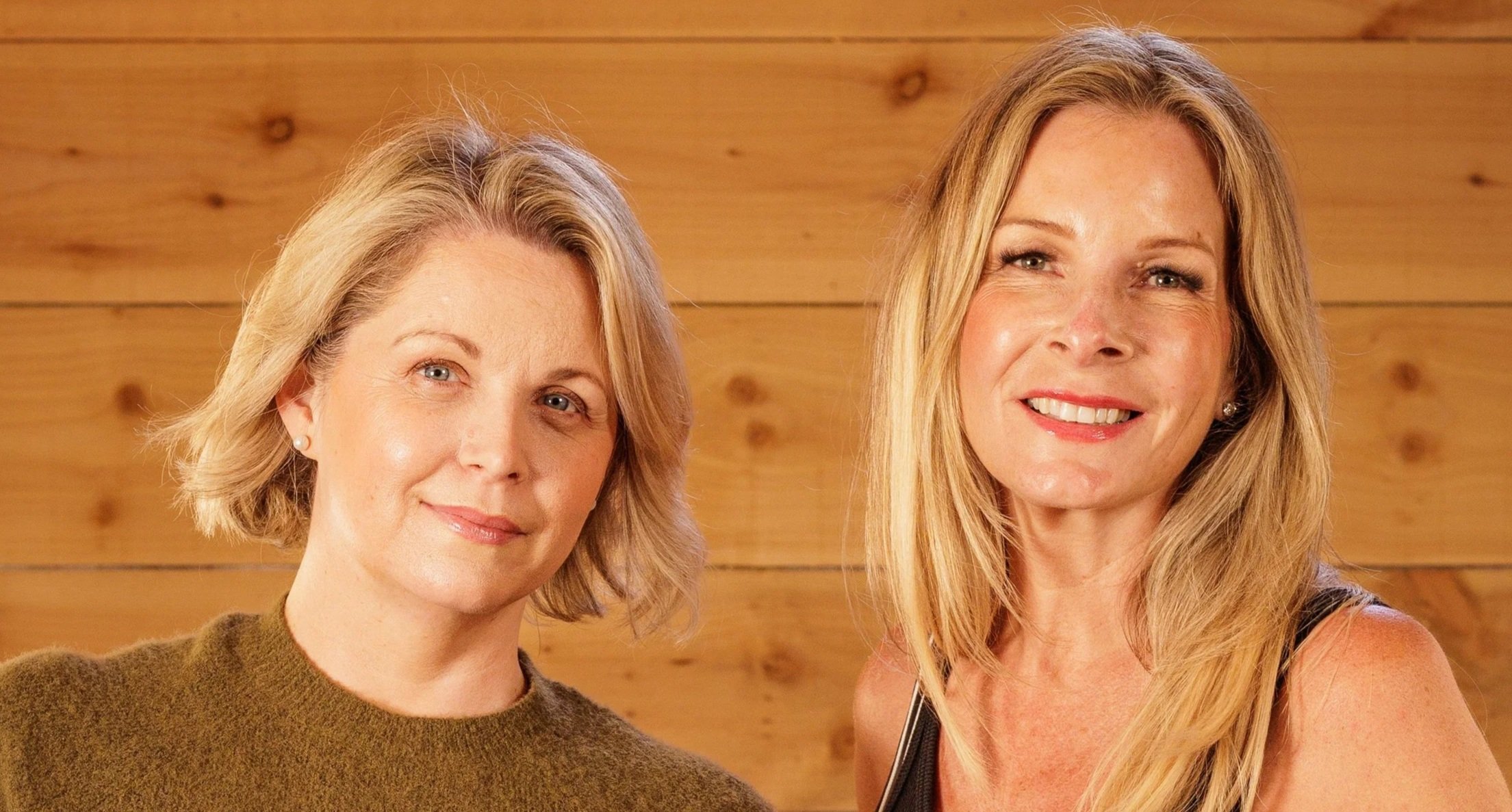
Blog by Georgie Sliney McCormack & Helen Flynn
Georgie and Helen are the co-founders of The Balance Project. Through their work, they are committed to making women's health information more accessible, informed, and empowering. They believe better conversations lead to better understanding, better support, and better outcomes for women.
