
Menopause Care Is Still Failing Women - and This New Review Shows Exactly How
The Balance Project is collaborating with RCSI — your story could shape the future of menopause care in Ireland
A newly published scoping review in The Lancet Obstetrics, Gynaecology, & Women's Health has laid bare what many women already know from lived experience: menopause care is still fragmented, inconsistent, underprioritised, and too often deeply unresponsive to women's needs.
The review, Navigating menopausal care: a scoping review of health system responsiveness and gaps, analysed 89 studies across different populations and geographies to better understand how women experience menopause care within health systems. Its conclusion is both unsurprising and deeply concerning: women are frequently left feeling dismissed, unsupported, uninformed, and unsure where to turn.
At The Balance Project, this matters enormously. Because while menopause is a universal life transition for millions of women, the care surrounding it still too often depends on luck - luck in the provider you see, the information you are given, the language used around your symptoms, and whether your concerns are taken seriously at all.
A major life stage still treated as an afterthought
One of the most striking messages from this review is that menopause remains under-recognised and underprioritised across health systems, despite its very real effects on health, work, relationships, identity, and quality of life.
This is not a minor issue affecting a small number of people.
The review notes that, by 2030, around 500 million women aged 45-55 worldwide will be navigating perimenopause - roughly 6% of the global population. Women may spend up to a third of their lives postmenopausal, yet systems of care still fail to reflect the scale, significance, or complexity of this life stage.
Instead, many women encounter confusion, delays, fragmented pathways, and providers who are not adequately trained to recognise or manage what they are experiencing.
Women are still being dismissed
Perhaps the most validating aspect of this review is that it reflects what so many women have been saying for years.
Women reported feeling ignored, dismissed, and unsupported when seeking help for menopause-related symptoms. Many were left uncertain about what was happening in their bodies, what treatment options existed, or even which type of provider they should see.
That uncertainty is not a personal failing on the part of women. It is a system failing.
When care pathways are unclear, when provider roles are poorly defined, and when education around menopause is inconsistent, women are left to navigate a major hormonal transition largely on their own. Some are forced into self-advocacy simply to be heard. Others rely on friends, family, or social media to piece together information that should have been available through accessible, evidence-informed care.
The knowledge gap is still a huge problem
A central finding of the review is that provider training on menopause remains inadequate.
This is significant.
Because even when women do seek help, the quality of that support depends heavily on whether the professional in front of them has the knowledge, confidence, and time to respond appropriately. The review highlights persistent gaps in clinical understanding, particularly around menopause management, treatment options, and the broader ways menopause can affect women's daily lives.
This matters because menopause is not only about hot flushes.
It can involve sleep disruption, musculoskeletal pain, mood changes, cognitive changes, anxiety, emotional strain, and a profound impact on confidence, work, identity, and relationships. If clinicians are not trained to understand that full picture, women will continue to receive partial, inconsistent, or inadequate care.
This is why our collaboration with RCSI Project CHIME is so important - please click here for more info on that and to be part of the change x.
Menopause care is still too fragmented
The review also points to a major structural problem: fragmented care.
Women may enter the system through a GP, primary care provider, family doctor, gynaecologist, or menopause specialist, but too often there is little clarity, continuity, or coordination between those points of care.
That fragmentation creates real consequences.
When nobody is clearly responsible for guiding women through their options, symptoms may be minimised, treatment may be delayed, and women can feel as though they are being passed from one place to another without meaningful support. In practical terms, women are left not only managing symptoms, but also managing the system itself.
And when someone is already exhausted, overwhelmed, anxious, or not sleeping properly, that burden becomes even heavier.
Inequity remains at the centre of the problem
Another important finding is that access to menopause care is not equal.
The review highlights disparities shaped by race, socioeconomic status, geography, and cultural context, with marginalised women often facing even greater barriers to care. It also notes that culturally responsive care remains lacking.
This is a crucial reminder that menopause care cannot improve meaningfully if improvements only reach the most informed, the most resourced, or the most empowered.
If care is to become truly responsive, it must work for women across different backgrounds, communities, and lived realities. That means not only improving knowledge, but also improving accessibility, communication, cultural competence, and trust.
Telehealth is helpful - but not a complete answer
The review acknowledges that telehealth may improve access for some women, which is important and welcome. But it also makes clear that telehealth is not universally acceptable, feasible, or appropriate.
That nuance matters.
Digital access can certainly reduce some barriers, particularly where specialist services are limited. But it cannot be treated as a catch-all solution to deeper structural problems such as poor provider education, lack of clear care pathways, cultural disconnect, or women not being taken seriously in the first place.
In other words, convenience alone does not equal quality care.
What needs to change
The message from this review is not simply that menopause care is lacking. It is that the gaps are now well documented, and the need for change is clear.
The review calls for:
better provider education
clearer care pathways
greater clarity around provider roles and responsibilities
patient-centred models of care
culturally competent approaches
research that better reflects the diversity of women's experiences
These are not small tweaks. They point to the need for systemic change in how menopause is understood, taught, discussed, and supported.
Why this matters so much to us at The Balance Project
At The Balance Project, this review reinforces something we believe strongly: women deserve better than confusion, dismissal, and pieced-together care.
They deserve accurate information. They deserve informed support. They deserve professionals who understand the transition they are going through. And they deserve a standard of care that reflects the scale and significance of menopause in women's lives.
Too often, women are expected to endure symptoms quietly, normalise disruption, or accept inadequate support as simply the way things are. But there is nothing inevitable about poor menopause care. These gaps are not fixed. They are the result of systems, priorities, education, and culture - which means they can be changed.
And they should be. AGAIN - this is why we are collaborating with RCSI Project CHIME and encouraging every woman who has any experience of perimenopause, menopause or post menopause to complete their questionnaire or email them telling them about your experience - as much or as little as you like - in whatever format you like. The goal of their information seeking and research is to build a whole new curriculum for trainee doctors, specifically for treating women in perimenopause, menopause or post menopause, and they WANT your experiences to learn from - warts and all. Click here for more info.
The bigger picture
This review is important not because it tells women something they do not already know, but because it gives weight and structure to what so many have experienced firsthand.
It confirms that the problem is not isolated. It is not anecdotal. And it is not "just part of getting older."
It is systemic.
If women are feeling dismissed, if care is fragmented, if provider knowledge is inconsistent, and if access remains inequitable, then the answer is not to tell women to cope better. The answer is to build better systems around them.
That starts with education. It continues with better conversations. And it requires a serious shift in how menopause is prioritised in healthcare, policy, and society.
At The Balance Project, we believe that change begins by naming the problem clearly - and refusing to treat women's experiences as secondary.
Because menopause care should not depend on chance.
It should be informed, responsive, equitable, and worthy of the women it is there to serve.
Always with balance. Always with you.
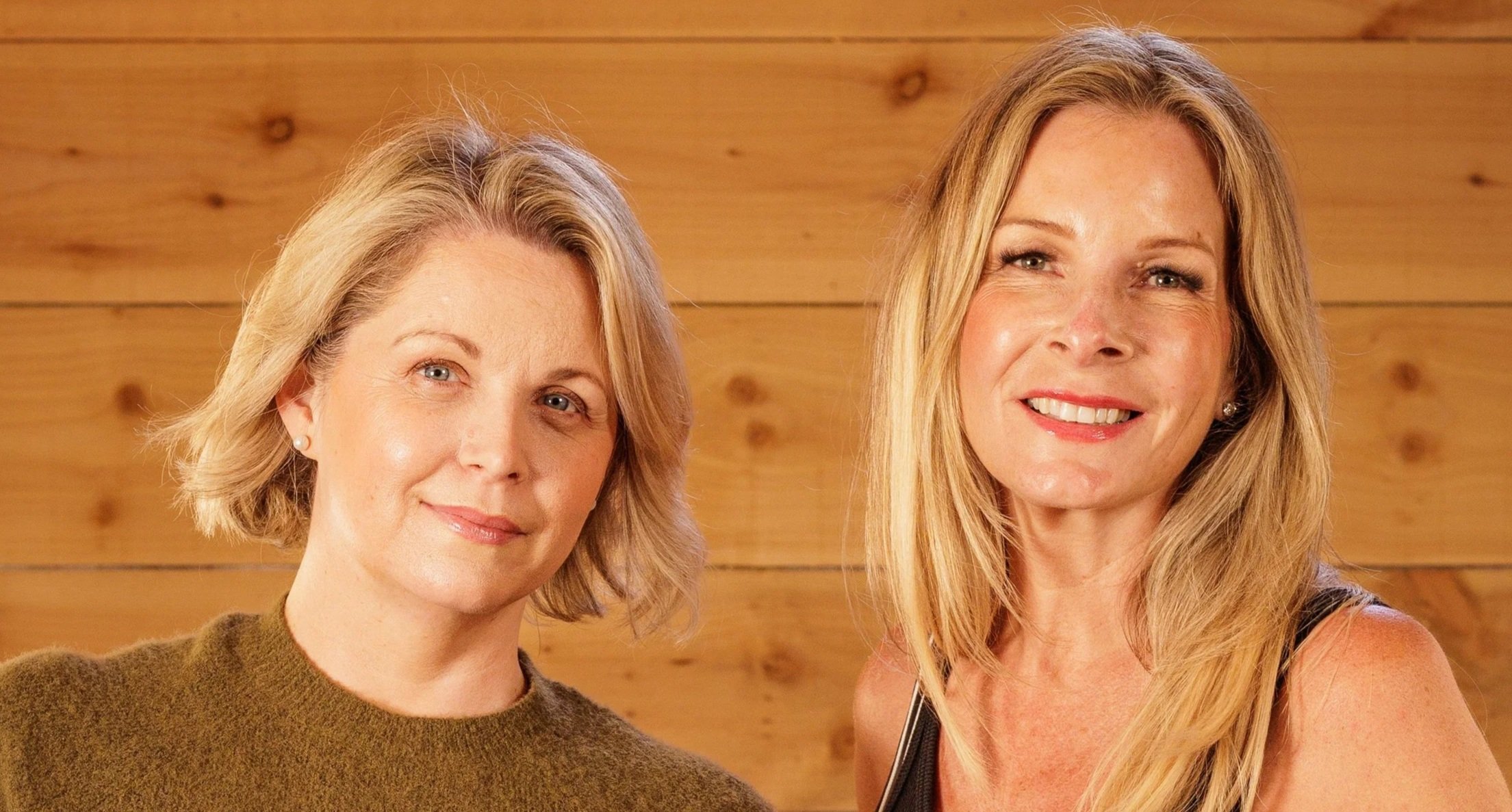
Blog by Georgie Sliney McCormack & Helen Flynn
Georgie and Helen are the co-founders of The Balance Project. Through their work, they are committed to making women's health information more accessible, informed, and empowering. They believe better conversations lead to better understanding, better support, and better outcomes for women.
